Nouveau Shetl-Parallel Lives

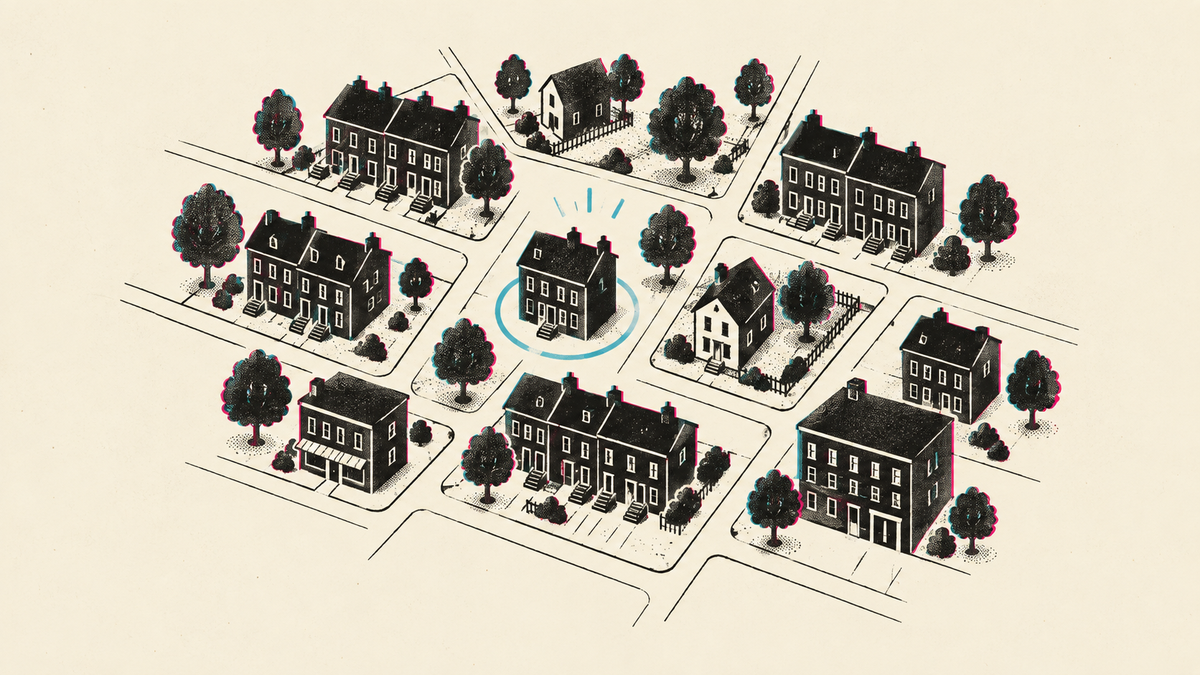
There were no kids playing on our street, but soon enough, cousins started moving into the neighborhood—en masse.
It was like an upper-crust American shtetl. The migration started, as it had to, with the patriarch and matriarch—my grandparents—who were already living in an apartment a block and a half away on State Street when we moved in. The same apartment where I played the mythical electric organ. They would soon relocate six blocks south, to the top of the newly completed John Hancock Center, the tallest building in Chicago at the time.
But before they moved, their Chicago-based progeny, in order of birth, settled within a few blocks of the State Street apartment. After my mom—the oldest of five, and only daughter—led the way, the next in line put down roots in an even larger house on State Street, two blocks north of my grandparents’.
Like my parents, Rick and Laura Kaplan1 would go on to have four children, with the same birth order: girl, boy, boy, girl. But they started about four years later. There was something time-shifted about their family—like a slightly out-of-phase version of ours, a parallel universe that had branched off with a near-identical set of variables.
But with any alternate universe, the parameters shift just enough—the weight of a proton, infinitesimally smaller; the electron’s orbital position, subtly altered—and those micro-variations ripple outward into distinct personalities and lifestyles.
Whereas my mom leaned more toward my grandfather’s passion for social action, Rick seemed more inspired by his business savvy and knack for making money. As a result, the Kaplans came across as more materialistic—or at least more openly comfortable with their money. Rick, to his credit, made a lot of it with the high-end development firm he launched after breaking away from his father’s more pedestrian shopping-center business.
A few years later, another aunt and uncle—Alan and Marcy2—moved just down the street from us on Astor. They broke the symmetry, producing just three kids.
My mom’s two younger brothers wisely stayed out of town. They leaned more counter-cultural and/or artistic. The Gold Coast wasn’t for them, though both kept hands in the family’s development and investment businesses—and benefited richly from them.
All of my local cousins, starting with Rick and Laura’s kids, joined us at our school—for a total of eleven of us at Parker. Rachel and Alex Kaplan, when they started piano lessons, studied with Mr. Metzler. He’d stop by our house first, then head over to theirs. We all went to different synagogues, though.
The Kaplans’ home is technically on “State Street, that great street,” the one Sinatra sang about in Chicago, where “they do things that they don’t do on Broadway.” (Like what?) Here, where the street abruptly terminates at Lincoln Park, a block north of the Kaplans’, it’s called State Parkway. The lyricist had to be referring to the downtown section of the street, with its majestic theaters and department stores.
State Parkway, with one notable exception, is decidedly less toddlin’. More like “State Street, that sedate street,” it’s a blend of elegant brownstones, luxury high-rises, and the occasional minor mansion. The parkway stretch, about three blocks, is bookended by two proper mansions, one and a half blocks north and south of the Kaplans’ not-insignificant brownstone.
To the north, abutting the park and stretching to Astor, sits the Archbishop’s Tudor-style castle. It sprawls across a half-block property and is occupied at the time by the austere John Cardinal Cody. His menacing presence will be my image of Catholic authority for years.
Three blocks south, at the other end of the Parkway and the spectrum, is Hugh Hefner’s original Playboy Mansion. A sybaritic temple of hedonism masquerading as a stately urban manor. Except for the brass plaque above the door that reads “If you don’t swing, don’t ring,” the place blends in perfectly with its quiet, stone-faced neighbors. I’m just old enough to fantasize about what goes on inside.
As they move in, extended family becomes the center of my social life outside school. At school, I maintain a separate circle of friends, none of whom live in my new neighborhood. We—the Kaplans and I—mostly ignore each other at Parker. There’s a tacit agreement: yeah, we’ll hang out and have fun in the neighborhood, but at school we’re in different grades and cliques. Don’t even say hello in the hallways; at most, exchange a barely raised eyebrow.
But with no neighborhood friends, we spend the long summer months running between each other’s houses.
Their oldest, Rachel, is a year younger than me—dreamy, philosophical, like her mom (a future therapist). Alex, three years my junior, is almost too young to hang with but too entertaining to ignore. He’s goofy, a practical joker, pure mischief—just like his dad. But he’s also weirdly sensitive. He’ll cry if he scrapes his knee, then laugh hysterically five minutes later. The age gap becomes more noticeable as I hit puberty and he doesn’t, but for now, he’s the closest thing I have to a little brother. We have frequent sleepovers, alternating houses, though he vastly prefers his place with its queen-size bed and electric blanket.
The younger two, Eli and Molly, are mostly too young to be full participants. Eli—like me, the artsy, sensitive type—sometimes tries to play with us, but he tends to drift away mid-game or get kicked out for not keeping up. Molly, the baby, is cute as hell, but mostly a prop in our games.
While their distinct personalities appeal to different sides of mine, playing with Rachel and Alex simultaneously can be an iffy proposition at best…
- Not their real names.
- Same.